
health calculator
Menu
  • Home
  • Calculators
    • BMI Calculator
    • BMR Calculator
    • TDEE Calculator
    • Macro Calculator
    • Keto Calculator
    • Step Calculator for Weight Loss
    • Protein Calculator
    • Barbell Calculator
    • 1 Rep Max Calculator
    • Fitness Planner – Workout Distribution Tool
    • Workout Planner – Weekly Schedule Generator
    • Gym Workout Planner with 800+ Exercises
  • About
  • Contact us
  • How To Use
  • Blog
Menu

Tag: Protein Supplements

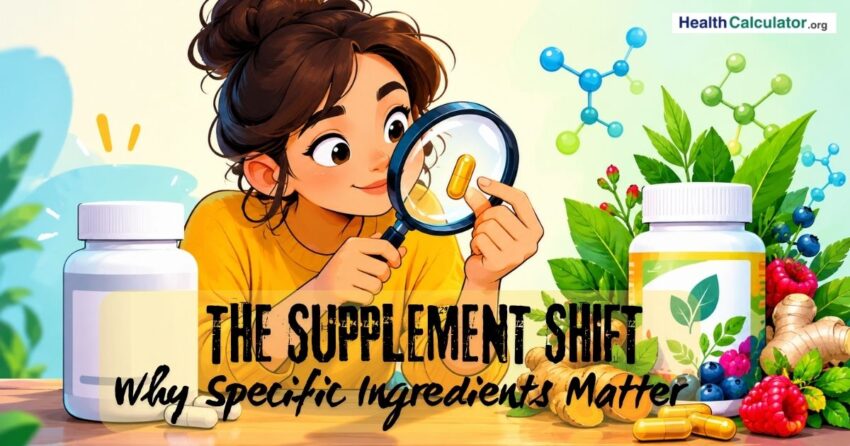
Dietary supplement comparison with a cartoon woman examining a capsule beside botanical ingredients

The Dietary Supplement Shift: Why Specific Ingredients Now Beat Generic Labels

Posted on October 21, 2026October 21, 2026 by healthcalculator.org

The biggest change in the US dietary supplement market right now is simple. People search for ingredients, not categories. They want magnesium, not a sleep aid. They want theanine, not a stress pill. This shift shows up in sales data and search trends from the past few months.

I noticed it myself when I pulled search data for this site last week. The phrase “magnesium glycinate” had more volume than “best sleep supplement” in our niche. That was not true a year ago. The same pattern appeared for theanine and berberine. Shoppers are doing more homework before they buy a dietary supplement.

What the Sales Data Shows

Spate and NielsenIQ released a report in late September 2026 that tracks this change. The sleep aid category fell 3.9% in the year ending July 2026. At the same time, magnesium supplement sales reached $1.86 billion, up 27%. Theanine popularity grew 148.8% with $247 million in sales.

Consumers are not abandoning sleep support. They are buying specific ingredients that they believe solve specific problems. Magnesium for calm and sleep. Theanine for focus and stress. Berberine for blood sugar support, even though the evidence there is still mixed.

This is a meaningful shift for anyone who writes about dietary supplements. The old advice was to compare brands within a category. The new advice is to compare ingredient forms and doses. Magnesium oxide and magnesium glycinate are not the same product. One is cheap and poorly absorbed. The other costs more and works better for most people.

When I looked at the top selling magnesium products on a major US retailer last week, the top three listings all named the chelated form on the front of the label. That was not the case in 2024. Brands are responding to ingredient literate shoppers.

The GLP1 Effect on Dietary Supplement Choices

About 11% of US adults now take a GLP1 drug for weight loss. That is roughly 28 million to 40 million people depending on the survey source. Gallup reported in July 2026 that current GLP1 use has nearly quadrupled since 2024.

Many of these users buy dietary supplements to manage side effects. Fiber for constipation. Electrolytes for dehydration. Magnesium for muscle cramps. Collagen gummies for skin and hair concerns that sometimes come with rapid weight loss.

This is a new customer for the supplement industry. They are not lifelong supplement users. They are people who started a prescription drug and now need help with the side effects. They search for answers on their phone, often late at night.

I spoke with a friend who started a GLP1 in August. She bought a fiber supplement and a magnesium powder within two weeks. She did not ask her doctor first. She found the products through a Facebook group. That story is common.

One thing she did not plan for was muscle. Rapid weight loss often takes muscle along with fat. Our guide on how to prevent muscle loss during rapid weight loss covers protein targets and strength training.

If you are on a GLP1 drug, use our protein calculator to set a daily target that protects muscle.

The risk here is real. Dietary supplements are not tested against GLP1 drugs for interactions. The FDA does not review them for safety before they reach the shelf. A person on a GLP1 drug who adds three new supplements in one month is running an experiment with no controls.

The Regulatory Gap Nobody Should Ignore

The NIH Office of Dietary Supplements states the rule plainly. Supplements are regulated as foods, not drugs. The FDA does not approve them for effectiveness. The FDA does not approve them for safety. There are no mandatory standards for ingredient combinations or doses.

For the FDA to ban a supplement, the agency has to prove it is unsafe. That is a high bar. It means most products stay on the market until a pattern of harm emerges.

Two things changed this month. On October 20, 2026, the FDA published final guidance on New Dietary Ingredient notifications. The guidance tells manufacturers what identity and safety information they must submit for an ingredient that was not sold before October 15, 1994. The notification must go to the FDA at least 75 days before the product enters interstate commerce. The FDA page for that guidance explains what manufacturers must submit.

This is progress, but it is narrow progress. It does not create a pre approval system for every dietary supplement. It only clarifies the paperwork for new ingredients. Most products on the shelf use old ingredients and never go through this process.

On September 10, 2026, Representative Diana Harshbarger introduced H.R. 10336, the Dietary Supplement Innovation Act. The bill would clarify the drug preclusion rule. That rule currently blocks supplement makers from using ingredients that were first studied as drugs. The bill aims to protect older ingredients from being pulled retroactively. It also sets standards for when preclusion applies.

The bill is still in committee (The full text is on Congress.gov.). It may not become law. But it signals that Congress is paying attention to how the FDA defines a dietary supplement. For consumers, the practical takeaway is the same. The rules are still loose. Your own research matters more than the label claim.

What to Look for on a Dietary Supplement Label

Start with the ingredient form. The front of the label may say “magnesium” in large letters. The back of the label tells you which form it is. Magnesium glycinate, magnesium citrate, magnesium malate, and magnesium oxide all behave differently in the body.

Look for the elemental amount. A capsule that says “magnesium glycinate 500 mg” does not contain 500 mg of magnesium. It contains 500 mg of the compound, and only a fraction of that is elemental magnesium. A good label lists both numbers. A vague label hides the elemental amount.

Look for a third party seal. USP Verified, NSF Certified, and ConsumerLab are the main independent programs in the US. The USP program tests for label accuracy, contaminants, and proper breakdown in the body. These seals mean the product was tested for purity, potency, and composition. They do not mean the product works for your condition. They only mean the bottle contains what the label says it contains.

Avoid proprietary blends. If the label lists a blend without amounts for each ingredient, you cannot know what you are taking. That is a common tactic in dietary supplement marketing. It lets a brand put a tiny amount of an expensive ingredient next to a large amount of a cheap one and call it a formula.

I tested a magnesium product I found through a social media ad last month. The label listed the compound weight but not the elemental magnesium. It also used a proprietary blend for the sleep support ingredients. I did not buy it. That is the kind of label that should make you pause.

Social Commerce and the Hype Problem

TikTok Shop sold more than $1 billion in dietary supplements in 2025. Many of those sales came from short videos with strong claims. A viral video is not a clinical trial. The FDA has rules about what supplement makers can say, but enforcement on social media is uneven.

The influencer problem is not new. What is new is the speed. A single video can move thousands of units of a dietary supplement in a week. The product may be fine. The product may be useless. The buyer often cannot tell the difference until they have already spent the money.

My rule is simple. If a video makes a specific health claim about a dietary supplement, I check the NIH Office of Dietary Supplements fact sheet for that ingredient before I click buy. If the fact sheet does not support the claim, I skip it. That takes two minutes and saves money.

How to Use a Dietary Supplement Wisely

Start with a test if you can. A blood test for magnesium or vitamin D is more useful than a guess. If you cannot get a test, start with a low dose and track how you feel for two weeks. Do not stack five new products at once. You will not know which one helped or which one caused a side effect.

Know the upper limit for your age and sex before you take anything daily. The NIH Office of Dietary Supplements keeps fact sheets for most major ingredients in one place, and each one lists the safe upper limit. Magnesium from supplements can cause diarrhea at high doses. Theanine can cause drowsiness. These are not dangerous for most people, but they are real effects.

If you take a prescription drug, check for interactions before you add a dietary supplement. Magnesium can interfere with some antibiotics. Fiber can slow the absorption of certain medications. Your pharmacist can check this faster than a web search.

What to Do Before You Buy

The dietary supplement market is moving toward specific ingredients and specific problems. That is good for consumers who do their homework. It is bad for anyone who buys based on a label claim or a viral video.

Read the ingredient form. Check for a third party seal. Know your dose. And if you are on a GLP1 drug or any prescription medication, talk to a pharmacist before you add something new. The rules are not strict enough to protect you on their own. Your own attention is still the best filter.


Disclaimer: This article is for information only. It is not medical advice. Talk to your doctor or pharmacist before you start any dietary supplement, especially if you take a prescription drug. The FDA does not review dietary supplements for safety or effectiveness before they are sold. Do not use this article to diagnose or treat any health condition.
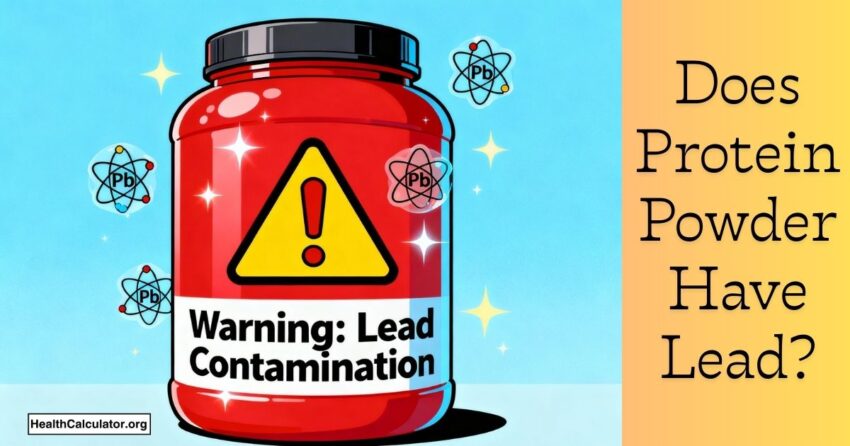
Protein Powder Lead

Lead in Protein Powder: What You Need to Know

Posted on November 24, 2025May 14, 2026 by healthcalculator.org

A recent Consumer Reports investigation found that more than two-thirds of protein powders contain lead levels exceeding safe daily limits. Some products tested contained lead amounts over 10 times higher than what experts consider safe to consume in a day.

This isn’t new. Consumer Reports first tested protein powders 15 years ago and found similar issues. But the 2025 results show the problem has gotten worse, not better.

The Testing Results

Consumer Reports tested 23 popular protein powders and ready-to-drink shakes for lead in protein shakes and powders between November 2024 and February 2025. They purchased products from Amazon, Walmart, Vitamin Shoppe, and Whole Foods Market. Each product was tested from multiple batches to ensure accurate results.

The findings were alarming. About 70% of products contained more than 120% of the safe daily lead limit, which experts set at 0.5 micrograms per day. All products delivered the amount of protein listed on their labels, ranging from 20 to 60 grams per serving. But that protein came with a heavy cost.

Two products stood out for the wrong reasons. Naked Nutrition Vegan Mass Gainer contained 7.7 micrograms of lead per serving. That’s 1,570% of the daily safe limit. Huel Black Edition powder had 6.3 micrograms, or 1,290% of the safe amount. Experts recommend avoiding these products entirely.

Four other products had dangerously high levels too. Garden of Life Sport Organic Plant-Based Protein and Momentous 100% Plant Protein both contained between 400% and 600% of safe lead limits. Consumer Reports suggests limiting these to once per week at most.

The good news? One product tested showed no detectable lead. MuscleTech 100% Mass Gainer came back clean in all tests.

Does Protein Powder Have Lead?

Yes. Lead exists naturally in Earth’s crust, and plants absorb it from soil as they grow. This means any food product made from plants will contain some level of lead. The question isn’t whether lead is present but how much.

Processing makes things worse. Turning whole peas into protein powder involves multiple steps. First, the peas are dehulled and ground into flour. Then the flour gets mixed with water to separate protein from starch and fiber. Finally, the protein is treated with food-grade acid and spray dried into powder. Each step creates opportunities for additional contamination, depending on the machinery and water quality used.

Many companies don’t reveal where they source their ingredients. But historically, most pea protein sold in the United States comes from China. The FDA rarely audits foreign supplement makers, which means quality control varies widely.

Plant-Based vs Dairy Protein

The type of protein matters significantly. Plant-based powders contained nine times more lead than dairy-based options like whey. They also had twice as much lead as beef-based protein powders.

Nearly all plant-based products tested showed elevated lead levels. Meanwhile, dairy-based powders generally performed better, though half still had enough lead that experts advise against daily use.

This pattern makes sense. Plants naturally absorb whatever exists in their environment, including heavy metals in soil and water. Dairy and meat products can also contain lead, but the contamination pathways differ. Cows get lead exposure through feed, water, and soil, but the concentration rarely reaches the levels seen in plant-based sources.

Pea protein has become popular in recent years because of its neutral flavor and low allergen risk. But this popularity comes with trade-offs that many consumers don’t realize.

Health Effects of Lead Exposure

No amount of lead is safe for human consumption. Lead serves no beneficial function in your body and can cause harm at any level of exposure.

Short-term symptoms include metallic taste in your mouth, abdominal pain, nausea, and headaches. Long-term exposure causes more serious problems. These include memory loss, difficulty concentrating, elevated blood pressure, kidney damage, and fertility issues in both men and women.

Pregnant women face particular risks. Lead exposure can cause miscarriage, stillbirth, premature birth, and low birth weight. It can also affect fetal brain development, leading to learning disabilities and behavioral problems later in life.

The average American already gets 5.3 micrograms of lead daily through normal food consumption. Adding a serving of Naked Nutrition Mass Gainer (7.7 micrograms) would put you well over the FDA’s interim reference level of 8.8 micrograms per day for adults.

And food isn’t your only source. Lead also exists in air, soil, household dust, and old paint. Every additional source pushes your total exposure higher.

Which Protein Powder With Lead Should You Avoid?

Based on Consumer Reports testing, these products had the highest lead contamination and should be avoided or severely limited.

Avoid completely:

Naked Nutrition Vegan Mass Gainer (7.7 mcg lead per serving)

Huel Black Edition powder (6.3 mcg lead per serving)

Limit to once per week maximum:

Garden of Life Sport Organic Plant-Based Protein

Momentous 100% Plant Protein

Use cautiously (not daily):

MuscleMeds Carnivor Mass powder (beef-based, over 200% of safe limit)

Six additional plant-based powders

Five dairy-based powders and shakes

One additional beef powder

Consumer Reports published the full list of tested products with specific contamination levels. You can view their complete findings and methodology at Consumer Reports.

How to Choose Safer Options

Look for third-party testing certifications. NSF Certified for Sport and Informed-Sport both test products for heavy metals and other contaminants. These certifications mean an independent lab verified what’s actually in the product, not just what the label claims.

NSF allows up to 10 micrograms of lead per serving, which is 20 times higher than Consumer Reports’ recommended limit. But products with NSF certification still tend to be safer than uncertified alternatives because they face regular testing and oversight.

Very few companies publish their heavy metal testing results. Momentous and Transparent Labs both make test results available on their websites. KOS and Equip Foods say they’ll provide results if customers request them. If a company won’t share testing data, that’s a red flag.

Choose dairy-based proteins when possible. Whey and casein powders consistently show lower lead levels than plant-based alternatives. If you prefer plant-based options for dietary or ethical reasons, look for products that source ingredients from North America rather than overseas.

Flavor doesn’t matter as much as you might think. Previous studies identified chocolate as a notable source of heavy metal contamination. But Consumer Reports found no meaningful difference between chocolate and vanilla products in 2025 testing.

Better Protein Sources

You probably don’t need protein powder at all. Most Americans already get more protein than federal guidelines recommend. Men consume about 155% of recommended amounts, and women get about 135%.

The average healthy adult needs 0.36 grams of protein per pound of body weight. For a 170-pound person, that’s about 61 grams daily. You can hit that target with one cup of plain Greek yogurt and 3.5 ounces of chicken breast. Or skip the chicken and eat 5 ounces of tempeh instead.

Older adults need slightly more. Aim for 0.45 to 0.59 grams per pound to offset age-related muscle loss. Pregnant women and serious athletes also have higher requirements. But even these groups can usually meet their needs through whole foods.

Use our Protein Calculator to determine your specific needs based on your age, weight, activity level, and goals.

Whole food protein sources include beans, lentils, tofu, eggs, dairy products, fish, poultry, and lean meats. These foods provide protein without the processing steps that introduce heavy metal contamination. They also contain vitamins, minerals, and fiber that isolated protein powders lack.

If you make your own protein shakes, swap the powder for peanut butter, Greek yogurt, or milk. You’ll get clean protein plus nutrients that support overall health.

The Regulatory Problem

Protein powders fall into a regulatory gray area that leaves consumers vulnerable. The FDA doesn’t review, approve, or test supplements before they hit store shelves. Manufacturers don’t have to prove their products are safe before selling them. There are no federal limits for heavy metal content in protein powder.

This wasn’t always true. Before 1994, companies had to prove herbal products were safe before selling them. Then Congress passed the Dietary Supplement Health and Education Act, which sharply limited FDA authority. Now supplements are “presumed safe unless found otherwise.”

The FDA relies on voluntary complaints and factory inspections to catch problems. But those inspections cover only a tiny fraction of the industry. About 12,000 supplement manufacturers operate in the United States. Last year, the FDA inspected just 600 of them.

This means contaminated or unsafe supplements regularly reach consumers before anyone catches the problem. A 2023 Government Accountability Office report found FDA oversight so inadequate that it urged Congress to expand the agency’s authority.

Companies can set their own standards for what counts as “harmful.” Many told Consumer Reports they follow guidelines from the FDA, EPA, World Health Organization, or European Food Safety Authority. But most of those organizations have no specific limits for lead in protein powders. The ones that do set thresholds far higher than what public health experts consider safe.

What You Should Do

Cut back on protein supplements if you use them regularly. Most people don’t need them to meet their protein goals. Whole foods provide better nutrition without the heavy metal exposure.

If you do use protein powder, limit it to a few times per week rather than daily. Avoid products with California Prop 65 warnings on the label. These warnings indicate the product contains chemicals known to cause cancer, birth defects, or reproductive harm at levels the state considers significant.

Check whether your preferred brand publishes heavy metal testing results. If they don’t, ask for them. Companies that refuse to share testing data should raise concerns.

Choose dairy-based proteins over plant-based when you do buy supplements. Whey and casein consistently test lower for lead contamination. And calculate your actual protein needs before buying any supplement. Use the USDA protein calculator or our Protein Calculator to get personalized recommendations based on your age, weight, and activity level.

Track your lifting progress and nutritional needs with our Barbell Calculator and 1 Rep Max Calculator to optimize your training without relying heavily on supplements.

The protein industry has grown into a multibillion-dollar business by convincing people they need more protein than they actually do. Don’t fall for it. Most people eating a balanced diet already get plenty of protein through normal meals. Adding supplements just increases your exposure to contaminants like lead without providing meaningful benefits.

Check CDC guidance on lead exposure symptoms to understand warning signs and protect your health.


Disclaimer: This article is for informational and educational purposes only and should not be considered medical, nutritional, or professional health advice. Always consult a qualified healthcare professional before making major dietary changes or using supplements regularly.

🧮 Our Health Tools

📊 Smart BMI Calculator → 🔥 BMR Calculator → ⚡ TDEE Calculator → 🥗 Macro Calculator → 🥑 Keto Calculator → 👟 Step Calculator for Weight Loss → 🏋️ Barbell Calculator → 💪 1 Rep Max Calculator → 🍗 Protein Calculator →


Health Calculator
Free and accurate online tools for tracking your body stats, diet, and health — all in one place.

Latest Posts

  • Ebola Outbreak: Spread, Survival, and Stopping It
  • The Dietary Supplement Shift: Why Specific Ingredients Now Beat Generic Labels
  • The Tingling Molecule: How Alkylamides in Sichuan Pepper and Echinacea Rewire Pain and Immunity
  • Sexually Transmitted Diarrhea and Shigella Infection What to Know
  • Top 10 Melatonin Rich Foods for Better Sleep

Links

  • About
  • Contact us
  • Privacy Policy
  • Terms & Conditions
  • Disclaimer
  • How to Use
  • Blog

Calculator

  • BMI Calculator
  • BMR Calculator
  • TDEE Calculator
  • Macro Calculator
  • Keto Calculator
  • Step Calculator for Weight Loss
  • Protein Calculator
  • 1 Rep Max Calculator
  • Barbell Calculator
  • Fitness Planner – Workout Distribution Tool
  • Workout Planner – Weekly Schedule Generator
  • Gym Workout Planner with 800+ Exercises
  • Instagram
  • Facebook
  • YouTube
© 2026 Health Calculator | Powered by Minimalist Blog WordPress Theme