

The US government changed its nutrition advice dramatically. Officials unveiled the new food pyramid that replaces MyPlate and reverses decades of dietary guidance.
This isn’t a small tweak. The new diet pyramid puts protein and healthy fats at the top while pushing grains to the bottom. It tells you to eat full-fat dairy instead of low-fat versions. It features a ribeye steak and a stick of butter as healthy foods.
But this change has sparked major debate. Some nutrition experts call it a step forward. Others say it contradicts science and could harm public health.
Here’s what you need to know about the new food triangle and how it changes the way Americans are supposed to eat.
Why the Food Pyramid Changed
The original food pyramid launched in 1992 with grains at the base. It told people to eat 6 to 11 servings of bread, cereal, rice, and pasta every day. Fats were at the tiny top, labeled as foods to use “sparingly”.
That version got replaced by MyPyramid in 2005, then MyPlate in 2011. MyPlate showed a divided plate with vegetables, fruits, grains, and protein, plus a small dairy circle on the side.
The 2026 version throws out that model completely. The government says Americans need to “eat real food” and stop consuming ultra-processed products. The new pyramid shifts focus to protein, healthy fats, and eliminating added sugars.
The official stance is that this change will reduce chronic diseases like obesity, diabetes, and fatty liver disease. But critics point out that established procedures for writing dietary guidelines were bypassed, including public consultation.
What the New Food Pyramid Looks Like
The new diet pyramid is literally upside down. What used to sit at the narrow top now dominates the wide top section.
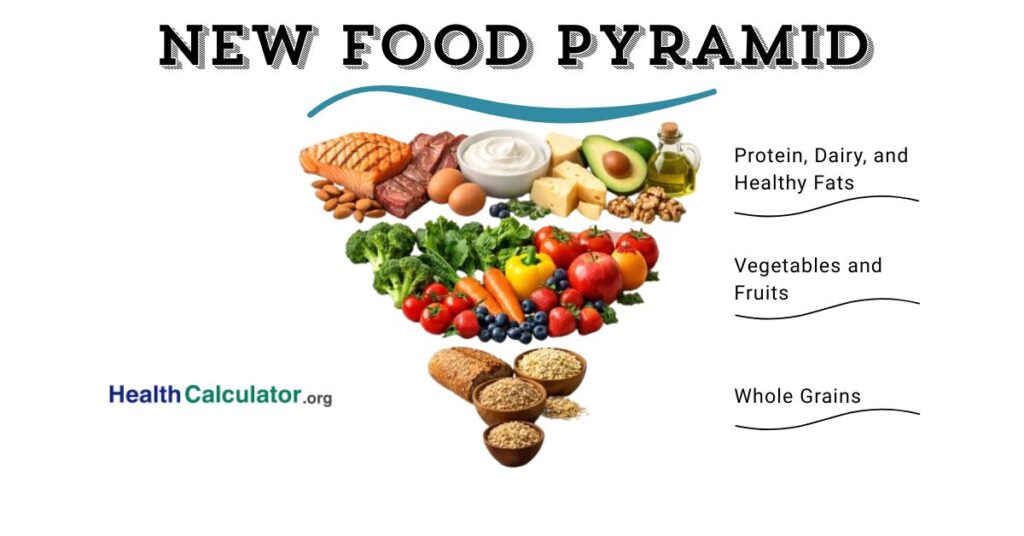
Top Tier: Protein, Dairy, and Healthy Fats
This is the biggest section. The guidelines say to prioritize protein at every meal. You’re supposed to eat 1.2 to 1.6 grams of protein per kilogram of body weight each day.
That’s a huge jump from the old recommendation of 0.8 grams per kilogram.
For someone who weighs 70 kilograms (154 pounds), that means eating 84 to 112 grams of protein daily. For an 80-kilogram person (176 pounds), the target becomes 96 to 128 grams.
The pyramid shows eggs, seafood, meats, full-fat dairy, nuts, seeds, olives, and avocados at the top. A ribeye steak appears prominently in the graphic, positioned right next to turkey.
Full-fat dairy gets special emphasis. The guidelines specifically say to consume full-fat dairy with no added sugars. This reverses decades of advice to choose low-fat or skim milk products.
The “healthy fats” category includes butter and beef tallow alongside salmon, vegetable oil, and walnuts. These animal fats were previously considered unhealthy, but now they’re listed as cooking options.
Middle Tier: Vegetables and Fruits
The new pyramid puts vegetables and fruits in the middle section. The guidelines recommend eating them throughout the day, focusing on whole produce.
Specific targets are three servings of vegetables and two servings of fruit per day. But unlike protein, the guidelines don’t define exact serving sizes for produce.
The emphasis is on variety and eating whole fruits instead of drinking juice. The previous MyPlate model gave vegetables and fruits more prominence, dedicating half the plate to them.
Bottom Tier: Whole Grains
Grains now occupy the smallest space at the bottom. The new diet pyramid recommends two to four servings of whole grains daily, adjusted based on your caloric needs.
The guidelines stress choosing whole grains over refined carbohydrates. White bread, white rice, and regular pasta are discouraged.
This is a dramatic reduction from the 1992 pyramid, which made grains the foundation with 6 to 11 daily servings.
Foods to Avoid
The new food pyramid takes a hard stance against certain foods.
Ultra-processed foods are the main target. These include packaged meals with artificial flavors, preservatives, or long ingredient lists.
Sugar-sweetened beverages like soda and fruit juice drinks are out. Added sugars in any form should be eliminated or severely limited.
Refined carbohydrates including white bread, regular pasta, pastries, and most breakfast cereals don’t fit the guidelines.
The approach focuses on eating foods with one ingredient. An egg is just an egg. A chicken breast is just chicken. Butter is just cream.
The Protein Controversy
The protein recommendations have created the most discussion. Eating 1.2 to 1.6 grams per kilogram of body weight is 1.5 to 2 times the previous guideline.
The new pyramid emphasizes animal-derived protein sources. Previous versions encouraged a more plant-forward approach.
For someone weighing 150 pounds (68 kg), the target is roughly 82 to 109 grams of protein daily. That might look like three eggs at breakfast (18g), a chicken breast at lunch (30g), a cup of Greek yogurt as a snack (20g), and a salmon fillet at dinner (40g).
This level of protein intake is supported by some research showing benefits for muscle maintenance, metabolism, and satiety. But it requires planning and often costs more than carbohydrate-heavy diets.
You can calculate your exact protein needs using a protein calculator based on your weight and activity level.
The Saturated Fat Paradox
The new guidelines contain a confusing contradiction about saturated fat.
The document states that saturated fats should be no more than 10% of total daily calories. This is the same limit from previous guidelines.
But the same document encourages eating full-fat dairy, red meat, butter, and beef tallow. These foods are high in saturated fat.
The visual pyramid features a ribeye steak and a stick of butter prominently displayed. Officials reportedly debated details like “how big the ribeye should be” until the last minute.
Donald Layman, who served on the committee behind the guidelines, said the 10% saturated fat cap “has got to go”. He explained it’s “simply there because all the medical people want to see it” and “they’re not ready to swallow that bullet yet”.
This mixed message reflects an attempt to compromise with health advocacy groups and medical societies that have long supported limiting saturated fat.
Nutrition scientist Christopher Gardner, who served on the 2025 dietary guidelines advisory committee, pointed out that swapping butter and beef tallow for vegetable oils benefits LDL cholesterol. He noted this has been established science for 75 years.
What Nutrition Experts Are Saying
The new food pyramid has divided the nutrition community.
Some experts support the focus on whole foods and the war against ultra-processed products. The emphasis on adequate protein intake also gets approval from those who believe previous recommendations were too low.
But many nutrition scientists have raised serious concerns. They argue that the new pyramid contradicts established research linking red meat and saturated fat to heart disease.
Critics also point out that the guidelines were developed without following standard procedures, including public consultation. This departure from normal practice has raised questions about the scientific basis for the changes.
Environmental concerns are another issue. High consumption of red meat and full-fat dairy has significant climate impacts compared to plant-based proteins and lower-fat options.
Harvard’s Nutrition Source noted both progress and problems in the 2025-2030 guidelines, highlighting that while some changes move in a positive direction, others raise scientific questions.
Sample Meal Ideas Following the New Pyramid
Here’s what eating according to the new diet pyramid might look like.
Breakfast: Three scrambled eggs cooked in butter, half an avocado, a small bowl of berries, and a slice of whole-grain toast.
Lunch: Grilled chicken breast over mixed greens with olive oil dressing, cherry tomatoes, cucumber, and a small serving of quinoa. Full-fat plain yogurt on the side.
Snack: A handful of almonds and an apple.
Dinner: Baked salmon with roasted broccoli and cauliflower cooked in olive oil, a side salad, and a small portion of brown rice.
This sample day prioritizes protein at each meal, includes healthy fats from whole food sources, loads up on vegetables and fruits, and limits grain servings to two to three.
The pattern differs significantly from typical American eating, which often features large servings of pasta, bread, or rice with smaller amounts of protein and vegetables.
Making the Transition
Switching to the new food pyramid requires changes for most people.
Start by calculating your protein target. Multiply your weight in kilograms by 1.2 to get your minimum daily grams. (To convert pounds to kilograms, divide your weight by 2.2.)
Build meals around protein sources first. Choose eggs, fish, chicken, beef, Greek yogurt, cottage cheese, or plant proteins like lentils and beans.
Add vegetables to every meal. Aim for variety in colors since different vegetables provide different nutrients.
Switch to full-fat dairy if you currently use low-fat versions. Choose plain options without added sugars.
Replace refined grains with whole grain alternatives. Brown rice instead of white rice. Whole wheat bread instead of white bread. But keep portions smaller than you might be used to.
Cook with real fats like butter, olive oil, or avocado oil instead of highly processed seed oils or margarine.
You can track your macronutrient intake and energy needs using a TDEE calculator to understand how these changes affect your overall diet composition.
Who Should Follow This Pyramid
The new guidelines are designed for the general American population. But individual needs vary significantly.
Athletes and very active people may need even more protein than the 1.2 to 1.6 grams per kilogram recommendation. Those doing strength training often aim for 1.6 to 2.2 grams per kilogram.
Older adults may benefit from the higher protein targets since muscle loss accelerates with age. Adequate protein helps maintain strength and functional ability.
People with certain medical conditions should consult healthcare providers before making major dietary changes. Those with kidney disease need to be careful with protein intake. People with high cholesterol may want to limit saturated fat despite the new guidance.
Vegetarians and vegans can follow the pyramid’s principles by emphasizing plant proteins like beans, lentils, tofu, and tempeh. But meeting the protein targets requires planning.
Understanding your individual calorie needs and body composition goals can help determine if this approach fits your situation. A BMI calculator provides a starting point for assessing your current health status.
The Bottom Line
The new food pyramid represents a major shift in US nutrition policy. It prioritizes protein and healthy fats while reducing emphasis on grains. It takes a strong stance against ultra-processed foods and added sugars.
Some changes align with emerging nutrition science. The focus on whole foods makes sense. Higher protein intake has research support for many people. Eliminating ultra-processed products addresses a real problem in the American diet.
But contradictions about saturated fat and concerns about the development process have sparked legitimate debate. The emphasis on red meat and full-fat dairy goes against decades of cardiovascular research that many scientists still support.
Whether this new diet triangle improves American health will become clearer over time. For now, the most widely accepted principles remain eating plenty of vegetables and fruits, choosing whole foods over processed ones, and finding an eating pattern you can sustain long term.
The Harvard Healthy Eating Plate, developed by nutrition experts at Harvard School of Public Health, offers an alternative evidence-based approach that balances different views in the nutrition community.
What matters most is finding an eating pattern that provides adequate nutrition, supports your health goals, and fits your life. The new food pyramid offers one framework, but it’s not the only way to eat well.