
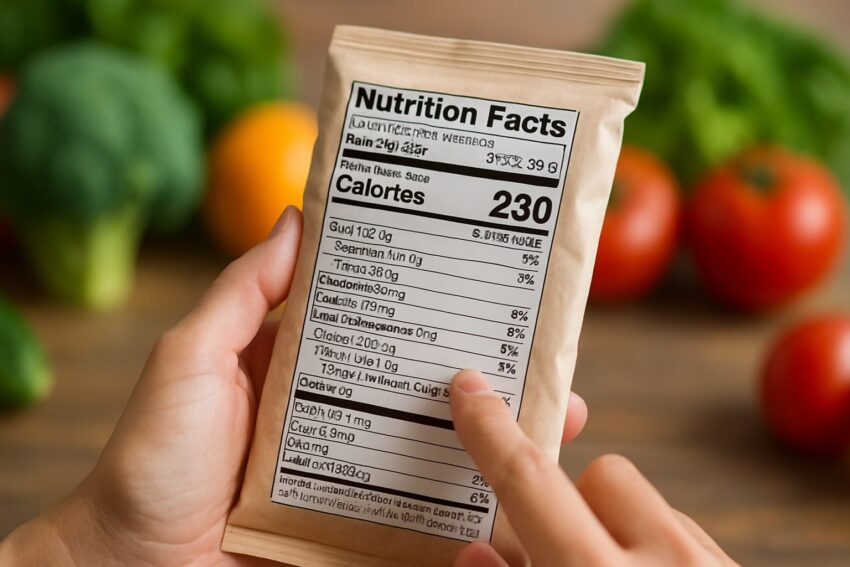
Making healthy food choices often relies on understanding what you’re really eating. One of the best tools to help you make informed decisions is the food nutrition label found on packaged foods and drinks. By learning how to read food nutrition labels, you can balance your diet, manage your weight, and control your intake of sugar, fat, and salt. This knowledge can lead to better overall health.
In this guide, we will break down nutrition labels step-by-step, provide real-life examples, and answer common questions. This way, anyone from beginners to health-conscious eaters can confidently evaluate what they buy and eat.
Why Food Nutrition Labels Matter
Nutrition labels provide clear information about what’s in your food. They allow you to:
- Compare products quickly.
- Track your daily intake of calories, protein, fat, sugar, and sodium.
- Identify hidden ingredients like added sugars or trans fats.
- Support goals such as managing weight, building muscle, or controlling health issues like high blood pressure or diabetes.
For example, someone choosing between two breakfast cereals might find that one has nearly double the sugar, even if the calorie count looks similar. That quick glance at the label can be the difference between a healthy start to the day and a sugary crash.
You can use our free basal metabolic rate calculator app to understand your daily calorie needs.
You can checkout FDA’s nutrition label education here.
Key Parts of a Nutrition Label
Understanding a nutrition label means focusing on the most important sections.
1. Serving Size
- Always start here. The serving size shows how much food the nutrition facts apply to. If the serving size is 100g but you eat 200g, you need to double everything listed.
- Example: A bag of chips says “Serving Size: 15 chips.” You eat 30 chips, which means the calories, fat, and sodium are all doubled from what’s listed.
2. Calories
- Calories indicate the amount of energy the food provides per serving.
- Tracking calories helps with weight management. Lower isn’t always better—you need enough calories for energy, but not so many that you gain extra weight.
3. Macronutrients (Carbohydrates, Proteins, Fats)
- Total Carbohydrates: This includes starches, fibers, and sugars. Focus on foods high in fiber and low in added sugars.
- Proteins: These are vital for building and repairing tissues. Look for foods with moderate protein and without excess saturated fat.
- Fats: Pay attention to the type of fat. Unsaturated fats, like those found in nuts and olive oil, are healthy, while trans fats are harmful.
You can use our free app to calculate your ideal macronutrient balance.
4. Added Sugars
- Nutrition labels now list added sugars separately from natural sugars.
- For better health, the American Heart Association suggests limiting added sugars to:
- 25g/day for women
- 36g/day for men
- Example: A flavored yogurt may seem healthy, but the nutrition label might reveal it has 20g of added sugar—almost your entire daily limit in one snack.
5. Sodium (Salt)
- Too much sodium increases the risk of high blood pressure.
- Aim for less than 2,300 mg of sodium per day (lower if your doctor recommends it).
- Check labels on processed foods like soups, sauces, chips, or frozen meals, as they often contain hidden sodium.
6. Percent Daily Value (% DV)
- % DV shows how much a nutrient in one serving contributes to your daily recommended intake.
- As a rule of thumb:
- 5% DV or less = low in that nutrient
- 20% DV or more = high in that nutrient
How to Compare Foods Easily
Here’s a quick food comparison example using nutrition label data:
| Item | Calories (per serving) | Sugar | Sodium | Fiber |
|---|---|---|---|---|
| Breakfast Cereal A | 200 | 18g | 200mg | 2g |
| Breakfast Cereal B | 190 | 8g | 150mg | 4g |
Looking at the table, Cereal B is clearly the healthier choice. It has lower sugar, lower sodium, and higher fiber. Both cereals are similar in calories.
Tips for Making Healthy Choices
- Check serving sizes carefully to avoid overeating.
- Prioritize fiber-rich foods that keep you full longer, like whole grains and beans.
- Limit packaged foods that are high in sodium and added sugars.
- Choose foods with healthy fats, such as nuts, fish, and avocado, instead of those with saturated and trans fats.
- Focus on nutrient-dense foods that provide vitamins and minerals rather than just empty calories.
Real-Life Examples and Scenarios
1. Choosing a snack bar:
Two bars claim to be “healthy.” One has 250 calories, 12g protein, and 3g fiber. The other has 250 calories but only 2g protein and 1g fiber along with 18g added sugar. Even though the calories are the same, the first bar is a better choice nutritionally.
2. Buying bread:
Whole-wheat bread with 4g fiber per slice is far better than white bread with 1g fiber, even if the calories per slice are nearly identical.
3. Checking drinks:
A can of soda has 150 calories, all from sugar. Sparkling water has 0 calories and no sugar. That choice adds up significantly over time.
FAQs on How to Read Food Nutrition Labels
Q. Are low-calorie foods always healthy?
A. Not necessarily. Some low-calorie foods may be high in sugar or sodium. Always check the full label.
Q. What should I check first on a nutrition label?
A. Always start with the serving size. This helps you calculate everything correctly.
Q. How much fiber should I look for?
A. Aim for about 25 to 30g of fiber per day. Foods with 3g or more of fiber per serving are considered a good source.
Q. Why is added sugar listed separately?
A. Added sugars, like corn syrup or cane sugar, cause spikes in blood sugar and add empty calories, while natural sugars in fruit or milk come with beneficial nutrients.
Q. How do I know if a food is good or bad just by looking?
A. Check the serving size, calories, and % Daily Value. Aim for foods that are low in saturated fat, sodium, and sugar but high in fiber, vitamins, and protein.
Some more Real Life Examples of Reading Food Nutrition Labels for Healthy Choices
1. Choosing a Breakfast Cereal
- You pick two cereals at the store.
- Cereal A has 200 calories per serving, 18g sugar, and 2g fiber.
- Cereal B has 190 calories, 8g sugar, and 4g fiber.
- By reading the label, you choose Cereal B because it has less sugar and more fiber, which helps digestion and keeps you full longer.
2. Deciding Between Yogurts
- Flavored yogurt has 150 calories and 20g added sugar per serving.
- Plain yogurt with fresh fruit has 100 calories and only 6g natural sugar.
- Although flavored yogurt tastes sweet, the high added sugar makes it a less healthy choice than plain yogurt with natural fruit.
3. Checking the Sodium in Soups
- A canned soup label shows 700mg sodium per serving, and a bowl might contain two servings.
- Eating one bowl gives you 1400mg sodium, which is over half the daily recommended limit.
- Choosing a low-sodium or homemade soup can protect heart health and manage blood pressure.
4. Comparing Snack Bars
- One snack bar has 250 calories, 12g protein, and 3g fiber.
- Another has the same calories but only 2g protein and 1g fiber with 18g added sugars.
- The first bar is better for sustained energy and muscle repair, while the second has mostly empty calories from sugar.
5. Reading Labels on Bread
- Whole wheat bread contains 4g fiber per slice, while white bread has 1g fiber.
- Even if calorie content is similar, whole wheat improves digestion and provides lasting energy.
Nutrients to Watch That Are Not Good for Health
- Added Sugars: Too much leads to weight gain, diabetes risk, and heart disease. Labels now list added sugars separately, so limit these.
- Sodium (Salt): High sodium is linked to high blood pressure and heart problems. Choose low-sodium options.
- Saturated Fats: Found in fatty meats, butter, and some processed foods; too much can raise bad cholesterol and heart disease risk.
- Trans Fats: Artificial trans fats, which come from partially hydrogenated oils, are harmful as they raise bad cholesterol and lower good cholesterol. Avoid them completely.
Final Thoughts
Reading food nutrition labels may seem confusing at first, but with practice, it becomes easier. When you understand how to interpret serving sizes, check calories, and spot hidden sugars and sodium, you empower yourself to make healthier choices every day.
The next time you pick up something in the supermarket, don’t just look at the front packaging. Flip it around, read the nutrition facts, and choose what truly benefits your health.